PHP Commercial Painting today announced that longtime technology partner and software developer Joshua Herbison has joined the company as its new Chief Technology Officer (CTO), marking a new chapter in PHP's continued effort to incorporate technology into its commercial painting operations.
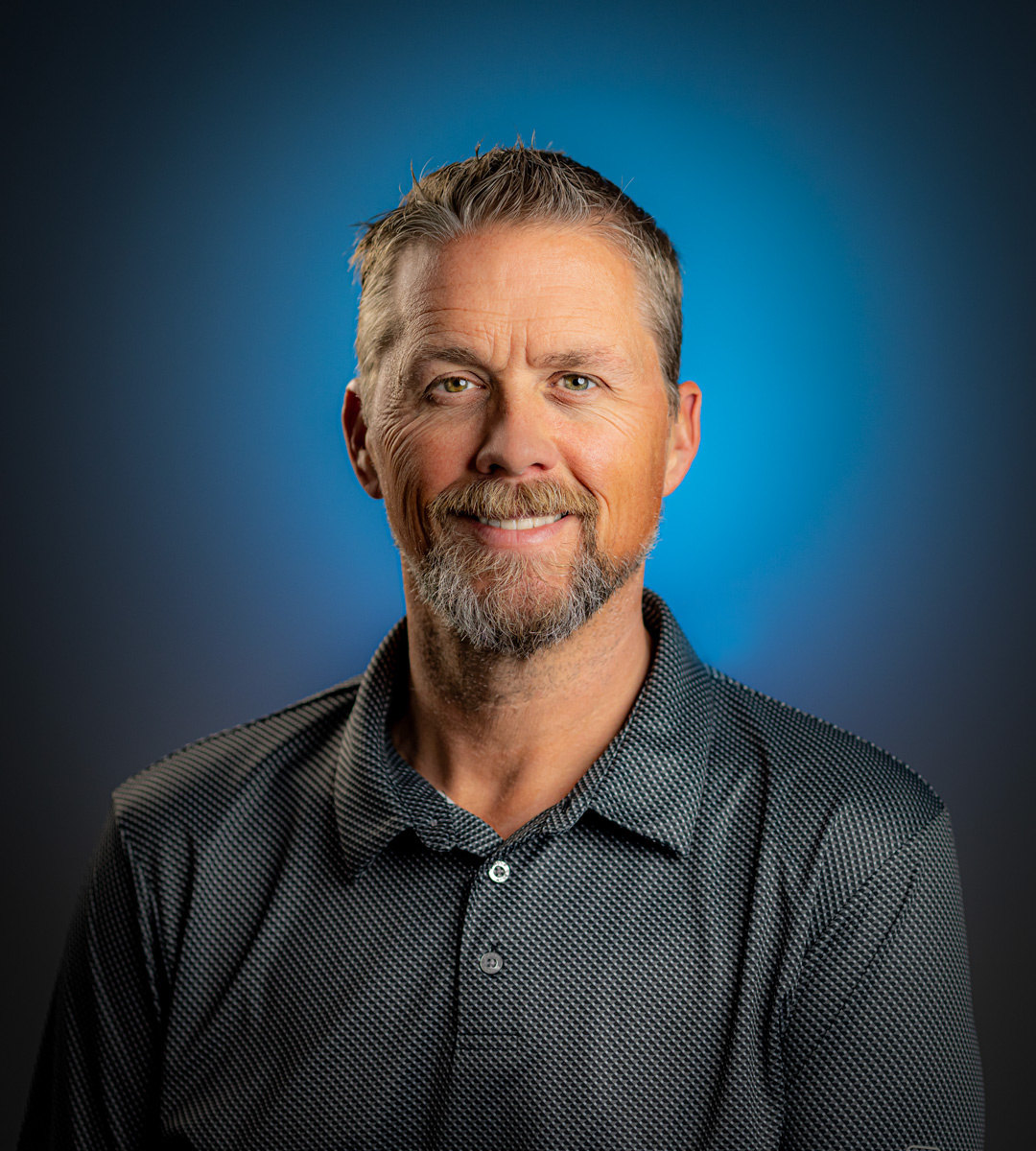
Herbison officially joined the PHP Commercial Painting team on October 8, 2024, but his relationship with the company began more than eight years ago.
Since 2016, Herbison and his company, IdeaPro, have worked behind the scenes on many of PHP's technology and digital initiatives, including websites, email infrastructure, hosting, photography, video production, search engine optimization and other technology services.
His transition from outside technology partner to an internal member of the PHP leadership team wasn't something that had been planned months in advance.
In fact, the conversation that led to it happened almost by accident—after recording an episode of the Workforce Skills with John Morris podcast.
A Conversation After a Podcast Changed the Plan
IdeaPro produces the Workforce Skills with John Morris podcast, and Herbison was working with PHP Commercial Painting owner John Morris on Episode 32 when Morris brought up a problem he had been thinking about.
PHP was becoming increasingly dependent on technology in its day-to-day operations, but the company didn't have someone internally dedicated to managing it.
When a computer stopped working, a printer had a problem, an employee needed assistance with email or a new employee needed technology set up, PHP depended on outside technology providers.
Herbison was already responsible for many of PHP's web-based and online technologies, while another outside provider handled much of the company's computer hardware, networking, printers and related infrastructure.
The arrangement worked, but there was an unavoidable problem: neither provider was sitting inside PHP's office.
A relatively simple technology problem could potentially slow an employee down for hours while the appropriate outside provider became available, connected remotely or traveled to the office.
After the podcast recording, Morris asked Herbison what it would cost—and what it would look like—to eventually hire someone internally who could handle technology for PHP.
Morris initially discussed hiring someone around January 2026.
Herbison questioned the timeline.
Waiting more than a year to bring technology expertise inside the company, he argued, meant PHP would spend another year dealing with the same delays while also postponing opportunities to improve its technology.
Morris agreed.
Then the conversation took an unexpected turn.
Instead of asking Herbison where PHP could find someone like him, Morris asked whether Herbison himself would be interested in the position.
Could he start October 8?
The answer was yes.
What began as a conversation about eventually hiring an internal technology employee resulted in PHP Commercial Painting having a Chief Technology Officer much sooner than Morris originally anticipated.
“I needed someone in the office that could help out with technology,” Morris said of the need that prompted the conversation. “I never thought Josh would be willing to work for PHP.”
An Eight-Year Relationship Built on Trust
Although joining PHP as an employee is new for Herbison, working with Morris isn't.
Their business relationship dates back to March 2016, when PHP Commercial Painting still operated a residential painting division under the name Phoenix House Painting.
Herbison's company was brought in to develop the Phoenix House Painting website.
That initial website project grew into a much broader relationship.
IdeaPro began managing the company's website hosting and email environment, provided photography for employee headshots, produced video content featuring Morris, worked on search engine optimization and continued providing web and technology support.
Over the years, the relationship evolved as Morris's company evolved.
PHP's commercial website existed alongside Phoenix House Painting, but by 2022 Morris had decided it was time to discontinue the residential-focused website and concentrate the company's online presence around its commercial painting business.
Morris called Herbison and told him he wanted to shut down the Phoenix House Painting website and focus on PHP's commercial presence.
Herbison recommended going further.
Rather than simply redirecting attention to the existing commercial website, he suggested building a new one.
Morris agreed.
Herbison designed and developed the new PHP Commercial Painting website, and the company's branding and logo were also redesigned as part of that period of transition.
The process reinforced a working relationship that had developed over the previous several years: Morris generally explains what he wants the business to accomplish and gives Herbison considerable freedom to determine how technology can help accomplish it.
That trust is particularly important as Herbison moves inside PHP.
A CTO inevitably needs access to some of a company's most critical systems. Websites, email, administrative accounts, computers, networks, software and company data all require a significant level of trust.
For Morris and Herbison, that relationship had already been established.
Herbison had been entrusted with PHP's website and email infrastructure for years before becoming an employee.
Now, instead of supporting PHP from the outside, he will be working inside the company every day.
Programming Since Age 11
Herbison brings more than three decades of software development and technology experience to the role, but his introduction to business technology began considerably earlier than most careers in information technology.
It started with a Commodore 64.
In 1985, Herbison's sister won a Commodore 64 computer in a walk-a-thon. Like many families that owned an early home computer, they initially used it primarily for games.
Herbison became interested in what else the machine could do.
By 1986, he was experimenting with programming in BASIC.
A year later, at just 11 years old, he began applying programming to an actual business.
His father owned a plant nursery, and Herbison began developing software on a DOS-based computer to help manage inventory and point-of-sale functions for the business.
He subsequently developed simple electronic contact-management programs for local doctors' and dentists' offices, allowing them to maintain patient contact information digitally.
Those businesses paid him for the work.
At the time, Herbison didn't necessarily view what he was doing as the beginning of a career. Programming was another way for an 11-year-old to earn money—much like mowing lawns.
Eventually, however, software development became much more.
Over the decades that followed, Herbison would build software, websites and technology solutions for businesses in numerous industries and work with companies internationally.
His experience expanded beyond programming into website development, online marketing, search engine optimization, business systems, digital media, photography, video and technology consulting.
But the fundamental approach remained remarkably similar to what he had done at his father's nursery:
Understand the business problem first. Then determine how technology can solve it.
That philosophy is now coming to PHP Commercial Painting.
Technology as a Business Tool
Herbison's career has not been limited to traditional IT support.
For more than 30 years, he has owned and operated businesses while helping other companies use technology to improve the way they operate and grow.
His work has included projects and business relationships across multiple countries and industries, ranging from service businesses to financial organizations and international companies.
At various points in his career, Herbison considered describing himself primarily as a business consultant rather than a software developer.
Ultimately, however, technology remained the mechanism through which much of that consulting occurred.
A company might initially approach him because it needed a website, software application or another piece of technology. Understanding how to build the technology required understanding how the business worked.
That often led to a larger question:
Why is the business doing it this way in the first place?
That question is already becoming familiar around PHP.
A Familiar Opportunity in an Unexpected Industry
Commercial painting wasn't an industry Herbison had expected to find himself working inside.
But the opportunity is familiar.
Earlier in his career, Herbison helped build technology around a Phoenix-area swimming pool service company at a time when many companies in that industry had relatively limited technology.
The company used custom software for operations and route management, including technology designed to improve service routes using mapping data to reduce unnecessary driving, save time and reduce fuel consumption.
Pool technicians had access to a custom iOS application in the field.
Customers could receive automated notifications when a technician was on the way, including estimated arrival information. They could be notified when service was complete or receive warnings when treatments involving heavier chemicals meant they should temporarily avoid swimming.
Those weren't technology features created simply for the sake of having technology.
Knowing that a technician was approaching gave a homeowner time to unlock a gate or bring a dog inside.
Better routing meant less time and fuel spent driving.
Mobile software gave field employees access to the tools they needed while performing the work.
Automated payments reduced administrative work.
The technology addressed practical problems experienced by employees, customers and the business itself.
The pool service company grew from zero accounts when it launched in August 2010 to approximately 140 recurring service accounts by August 2011, while turning away hundreds of additional opportunities that didn't fit the company's desired service model.
The experience reinforced something Herbison has seen repeatedly throughout his career: traditional service industries can change dramatically when practical technology is applied to real operational problems.
Now he's looking at commercial painting through a similar lens.
“My wife and I have talked about how I enjoy taking an industry that is lacking in technology or out of date and bringing it to modern tech,” Herbison said. “I never thought it would be commercial painting, but here we are.”
PHP Was Already Moving Toward Technology
Herbison is quick to point out that he isn't walking into a company that has ignored technology.
Morris has been actively pushing PHP toward greater technology adoption for years.
Processes that were once handled manually have already begun moving into digital systems.
Scheduling, for example, was previously managed using a physical whiteboard. PHP has since moved scheduling into its digital business software.
The company also uses digital estimating and takeoff technology, cloud-based email and productivity tools, electronic communication platforms and other systems throughout its operation.
The challenge isn't simply whether PHP has technology.
The challenge is making all of that technology work together—and making it practical for the people who actually have to use it.
PHP is a commercial painting contractor.
Its employees were hired because they understand estimating, project management, construction, painting, administration and field operations—not because they are software developers or IT professionals.
Some of the systems PHP uses can be complicated or unintuitive for employees who aren't particularly technology-oriented.
That creates an important distinction in Herbison's new role.
Success won't be measured by how many new applications PHP can introduce.
It will be measured by whether technology makes employees' jobs easier and helps the company operate more effectively.
Too Many Systems, Too Much Separation
One of Herbison's first observations has been the number of separate systems involved in PHP's daily operations.
Communication can happen in one platform, while other information lives somewhere else. Business information is stored in the company's third-party CRM, email and productivity tools operate in another environment, and employees may communicate through additional applications.
Permissions present another challenge.
Some systems don't provide the level of access control PHP would ideally like, potentially creating situations where giving an employee access to the information needed for one part of a job also exposes information unrelated to that employee's responsibilities.
Herbison's initial goal isn't necessarily to replace every system.
It's to understand them.
During his first days at PHP, he began documenting what technology the company uses, how systems connect, who has access to them and how employees actually use them.
He is also evaluating opportunities to consolidate systems and reduce unnecessary complexity.
Because PHP has used Google Workspace for company email since Herbison began working with the company in 2016, one early consideration is determining whether more processes can be consolidated around technology the company already owns and employees already use.
Fewer disconnected systems could mean less training, fewer passwords, better communication and a simpler technology environment.
But Herbison says he first needs to understand the operation.
Learning the Business From Inside the Estimating Office
Herbison's first desk at PHP is located in the estimating office.
That location has provided an immediate view into one of the most important functions of a commercial painting contractor.
Before PHP can manage a project, schedule painters or complete work, someone has to estimate it.
Herbison has spent his first days observing employees, asking questions and learning how estimating, project management and other departments interact.
He's also been looking at something more fundamental: the technology employees physically use to do their jobs.
Some office computers are aging and slow.
Software configurations aren't always consistent.
Architectural plans and other large project files have often been stored locally on individual computers rather than within a standardized shared storage structure.
That creates several problems.
Construction plan files can be enormous—sometimes exceeding a gigabyte.
If one employee downloads a set of plans and then emails it to several coworkers, PHP can end up storing multiple copies of the same massive file on different computers.
If an employee deletes the file, it may be gone.
If a computer fails, locally stored project information could be lost with it.
Herbison believes establishing better standards around shared storage and file management can reduce duplication while protecting important company information.
Again, the technology itself isn't necessarily complicated.
Sometimes the biggest improvement begins by asking a simple question:
Why are we doing it this way?
The New CTO Quickly Earns a Printing Reputation
One of Herbison's earliest targets has been paper.
A lot of it.
Within his first few days, employees were already joking about Herbison's enthusiasm for reducing unnecessary printing.
The issue became obvious while he watched everyday office processes.
In one example, an employee prepared a message for a morning video meeting using ChatGPT.
The employee then printed the message.
He read the printed page during the video call.
When the meeting ended, he crumpled up the paper and threw it away.
Herbison asked a straightforward question:
Why not read it from the phone?
The employee's answer was equally straightforward.
He hadn't thought about it.
The next time, he used the phone.
It's a tiny change.
But multiply tiny changes across dozens of daily processes, hundreds of projects and years of operation, and they begin to matter.
A much larger example involves construction plans.
Architectural drawings used on commercial construction projects are frequently printed on large-format sheets measuring approximately 24 by 36 inches.
A single project can involve 60 or more pages.
Herbison discovered that PHP could print two complete sets of plans for a project before a final contract was even in hand—one intended for the office and another for the field.
If plans changed, new sets might need to be printed.
He started asking questions.
Why does the office need a complete printed set?
The answer: someone might need to look at the plans.
Can't the PDF be viewed on a computer?
Yes.
What if the field set gets damaged?
Then another copy could be printed when that actually happens.
To a software developer, the logic seems obvious.
To employees who have followed the same process for years, however, printing two sets is simply how the job has always been done.
Changing technology, Herbison is discovering, may sometimes be easier than changing habits.
Technology Has to Work for the Employee
That human side of technology may become one of Herbison's biggest challenges.
Employees don't necessarily resist a process because they believe an older method is objectively better.
Often, they're simply comfortable with what they already know.
When Herbison asks why something is done a certain way, a common response is:
“That's how I was told to do it.”
His job now involves questioning some of those assumptions.
That doesn't mean changing everything simply because something can be changed.
It means determining whether a process still makes sense.
Herbison expects some resistance as PHP introduces new processes and makes better use of existing technology. He has encountered that throughout his career.
The pattern is familiar.
People can be reluctant to adopt something new.
Then they discover that the new process saves time or makes their job easier.
Suddenly, they don't want to go back.
For Herbison, employee adoption will therefore be just as important as software selection.
With decades of technology experience, he can learn and administer PHP's existing systems, but he can also help translate those systems for employees who don't spend their lives working with technology.
Training will be a significant part of the job.
Better Technology Doesn't Always Mean New Technology
Although custom software development is part of Herbison's background, he isn't entering PHP with a plan to immediately replace every third-party platform with something built internally.
PHP already has a third-party CRM.
It already has digital takeoff and estimating tools.
It already has cloud-based productivity technology.
Part of Herbison's responsibility will be learning those systems at a deeper level, administering them, helping employees use them more effectively and determining where existing technology is sufficient.
At the same time, Herbison and Morris have already discussed the possibility of developing custom systems when PHP encounters needs existing products don't adequately address.
What those systems might eventually become remains to be seen.
Four days into the job, Herbison isn't pretending to have a complete multi-year technology roadmap.
The immediate priority is understanding.
What does each department do?
What technology does it use?
Where is information stored?
Where does communication break down?
What are employees doing manually?
What processes are duplicated?
What information is difficult to access?
Where is time being wasted?
And perhaps most importantly:
Why?
The answers to those questions will determine what comes next.
Improving Communication, Not Just Computers
Herbison has also noticed that some challenges that initially appear technological are actually communication problems.
Estimating is one example.
A team can have sophisticated digital takeoff technology and still operate inefficiently if employees aren't sharing information with each other.
Estimators need to communicate with other estimators.
Estimating needs to communicate effectively with project management.
Project information needs to move between departments without requiring employees to hunt through emails, local files and unrelated communication systems.
Herbison believes reducing the number of disconnected systems PHP uses could help.
But software alone can't create collaboration.
That requires process changes as well.
It's an area where Herbison's background extends beyond traditional IT.
For much of his career, technology work has naturally led him into business consulting. To design a useful system, he first has to understand the process the system is supposed to support.
Sometimes that means discovering that the process itself needs improvement.
For now, Herbison says his focus is technology.
But he's also asking a lot of questions.
Growth Means More Than Adding People
Morris's objective for PHP Commercial Painting is to continue growing the company and winning more commercial painting work.
Herbison believes technology can support that growth—but he also believes technology can change how growth itself is achieved.
A company shouldn't need to add unnecessary administrative complexity every time it adds more work.
Better systems can allow existing employees to accomplish more.
Better information can reduce duplicated effort.
Better communication can prevent mistakes.
Better hardware can eliminate time lost waiting on slow computers.
Better file management can protect company information.
Digital plans can reduce printing.
Better training can help employees get more value from software the company is already paying for.
And better processes can help ensure technology isn't simply automating an inefficient way of doing something.
Those improvements may seem small individually.
Together, they can change how a company operates.
From Outside Vendor to Inside the Business
For Herbison, joining PHP also represents a significant personal career change.
After decades of owning businesses and serving numerous clients through IdeaPro, he now has an opportunity to concentrate a much larger portion of his attention on one organization.
IdeaPro will continue operating and supporting its existing clients, but Herbison's position at PHP gives him something different from the traditional client-and-vendor relationship he has known for most of his career.
As an outside technology provider, there are limits to how deeply someone can become involved in a client's daily operation.
A client calls when something needs to be built, changed or repaired. The technology provider completes the work and moves on to the next project or client.
Being inside the company changes that relationship.
Herbison can now see how PHP employees actually use technology every day.
He can watch an estimator work through a project rather than simply hearing about an estimating problem.
He can see where employees are saving files, how information moves between departments, what gets printed, what gets emailed, what gets entered multiple times and what causes employees frustration.
He can implement something and then watch what happens.
Did employees use it?
Did it actually save time?
Did it create another problem somewhere else?
Does it need to be changed?
Is additional training needed?
Could something else be automated?
Those questions are much easier to answer when the person responsible for technology is working alongside the people using it.
For someone who has spent most of his career building technology for businesses from the outside, that opportunity is one of the things that makes the new role different.
A Career Built Around Business Problems
Herbison's transition into PHP also brings together two areas of his career that have increasingly overlapped over the years: software development and business consulting.
Although his professional identity has largely remained centered around software and technology, his approach has rarely been limited to writing code.
When a business asks for software, Herbison wants to understand why it needs the software.
When someone asks for a website, he wants to understand what the website is supposed to accomplish.
When a company asks for automation, he wants to understand the process before automating it.
That distinction matters.
Automating a bad process simply creates a faster bad process.
Digitizing unnecessary paperwork doesn't necessarily eliminate the unnecessary work.
Buying another software subscription doesn't necessarily solve a communication problem.
And giving employees more applications doesn't necessarily make them more productive.
Sometimes the correct technology decision is to build something.
Sometimes it is to buy something.
Sometimes it is to better configure something the company already owns.
Sometimes it is to train employees to use an existing system correctly.
And sometimes the best solution doesn't require any new technology at all.
It may simply require asking why a process exists.
That is the approach Herbison intends to bring to PHP Commercial Painting.
Technology Doesn't Have to Be Complicated to Have an Impact
The changes Herbison has identified during his first few days demonstrate how broad the word "technology" can be.
Replacing an aging computer is technology.
Creating a standardized shared-file structure is technology.
Reducing unnecessary printing is technology.
Improving permissions is technology.
Teaching someone to read a document from a phone instead of printing it is technology.
Making sure employees know how to use software PHP already pays for is technology.
Developing a custom application is technology.
So is deciding that a custom application isn't necessary.
Herbison believes companies can sometimes become so focused on major technology projects that they overlook dozens of smaller opportunities directly in front of them.
At PHP, some of the first improvements may therefore seem surprisingly basic.
The company doesn't need to wait years for a massive software-development project before benefiting from having a CTO.
If a slow computer causes an estimator to lose 10 minutes every morning, that matters.
If employees repeatedly download and email gigabyte-sized architectural plan files because there is no standardized storage process, that matters.
If project information is difficult to find because it exists in several different systems, that matters.
If an employee avoids using a piece of software because no one has adequately trained them, that matters.
If PHP prints hundreds of large-format pages that nobody ultimately needs, that matters.
Technology improvement happens one problem at a time.
The First Priority Is Understanding PHP
Despite his familiarity with the company, Herbison recognizes that providing technology services to PHP from the outside for eight years is very different from understanding every detail of how the company operates internally.
That is why much of his initial work involves observation.
He is learning what each department does.
He is documenting systems.
He is reviewing accounts and administrative access.
He is examining how technology is connected.
He is looking at where company information is stored.
He is evaluating hardware.
He is learning how estimators work.
He is looking at communication between estimating and project management.
He is watching how employees interact with existing software.
And he is asking a lot of questions.
The goal isn't to walk into each department and immediately tell employees that everything they've been doing is wrong.
It's to understand why they are doing it.
Some existing processes may make perfect sense once the reasons behind them are understood.
Others may exist simply because someone established a procedure years ago and nobody has questioned it since.
Herbison expects to find both.
The challenge will be separating the two.
Fewer Systems, Better Use of Technology
One of Herbison's earliest objectives is reducing unnecessary fragmentation.
PHP currently relies on several different technologies for different parts of its operation.
That isn't unusual for a growing company.
A business encounters a problem, finds a product that solves it and adopts that product.
Later, another problem appears, so another product is added.
Then another.
Eventually, employees can find themselves working across multiple systems that were never designed to communicate with each other.
Information gets duplicated.
Employees need multiple accounts.
Training becomes more difficult.
Administrators have to manage permissions in several places.
Employees may not know which system contains the information they need.
Herbison wants to determine where PHP can simplify that environment.
Because PHP already uses Google Workspace for email and other cloud-based functions, one of his initial thoughts is to evaluate whether the company can make better use of technology it already has.
The objective isn't necessarily to put everything into one application.
It is to eliminate complexity that doesn't provide corresponding value.
If two systems are necessary, use two.
If five are necessary, use five.
But if five systems are being used to accomplish something that could reasonably be done with two, Herbison wants to know why.
Building Technology Only When It Makes Sense
Custom software development will also be an option.
Herbison and Morris have already discussed the possibility of building internal systems for PHP where existing products don't adequately meet the company's needs.
But Herbison isn't arriving with a predetermined list of applications he intends to build.
That list will come from understanding the company.
PHP already uses a third-party CRM and digital estimating technology. Those systems have helped the company move processes that were once manual into a more digital environment.
Herbison's immediate responsibility is to help PHP get more value from those technologies.
He can administer them.
He can learn their capabilities.
He can train employees.
He can improve the processes surrounding them.
And as he becomes more familiar with PHP's operation, he can identify the gaps.
If those gaps can be solved with an existing tool, that may be the answer.
If they require something custom, PHP now has a CTO who has been developing software since 1987.
The important thing, Herbison says, is that the technology follows the business need—not the other way around.
A Different Vision for the Field
Although much of Herbison's first week has been spent inside PHP's Phoenix office, his longer-term thinking extends into the field.
Commercial painting is performed on construction sites, not behind desks.
That means technology eventually has to work for employees who may spend most of their day away from the office.
Herbison believes that will become increasingly important.
Architectural plans are already digital.
Estimating is increasingly digital.
Project information is increasingly digital.
Yet once a project moves into the field, construction still frequently depends on printed plans and traditional processes.
Herbison sees an opportunity to change that over time.
“In five years this company is going to look completely different from a technology standpoint,” Herbison said.
He points to the company's existing use of digital estimating as an example of where the industry is already heading.
His vision of the future isn't particularly complicated.
Field employees could eventually have tablets that allow them to access project plans electronically rather than relying entirely on printed plan sets.
Project managers could have laptops that allow them to work effectively from a job site, vehicle, home or office rather than trying to accomplish everything from a mobile phone.
Company information could be accessible to the employees who need it without exposing information they don't.
Files could be centrally managed instead of living on individual computers.
Employees could communicate through fewer, better-connected systems.
And technology could become something employees rely on because it makes their work easier—not something they tolerate because management requires it.
Those ideas may sound ordinary in industries that have spent decades building around technology.
In commercial construction, implementation can be considerably more complicated.
Jobsites move.
Employees work in different locations every day.
Conditions change.
Internet access isn't always guaranteed.
Plans are revised.
General contractors use different systems.
Employees have varying levels of technical experience.
Any technology PHP introduces has to survive that reality.
Keeping Technology Practical
Herbison says one of the lessons from his previous work in service industries is that technology succeeds when it solves an obvious problem.
A field employee shouldn't need to understand the architecture of a software platform.
The employee needs to know what button to press.
A project manager shouldn't have to understand databases.
The project manager needs the correct project information when it is needed.
An estimator shouldn't have to think about where a file physically resides.
The estimator needs to know that the latest version is available and won't disappear if a computer fails.
Technology becomes powerful when the complicated work happens behind the scenes and the employee experiences something simple.
That will be an important standard as PHP evaluates its future systems.
The company doesn't need technology that looks impressive in a demonstration but becomes frustrating during everyday use.
It needs technology employees will actually use.
The Human Challenge of Technology
Herbison knows that may be harder than writing the software.
One of the patterns he has encountered throughout his career is that people frequently resist technological change before eventually embracing it.
A familiar process feels safe.
Even an inefficient process can be comfortable because employees understand it.
A new system requires learning.
It may temporarily slow someone down.
It may force an employee to abandon a routine they've followed for years.
That creates resistance.
Herbison has already experienced some of that during his first days at PHP.
His questions about printing are a simple example.
From his perspective, printing a document only to read it once and throw it away is unnecessary.
From an employee's perspective, that's simply the process they've always followed.
Neither a faster computer nor better software changes that automatically.
Someone first has to challenge the habit.
Herbison expects that employee training and adoption will therefore become major components of his position.
The objective isn't to turn PHP employees into technology experts.
It is exactly the opposite.
Technology should become simple enough that they don't need to be experts.
An Unusual Position in a Traditional Trade
The addition of a Chief Technology Officer may still be unusual for a commercial painting contractor.
PHP Commercial Painting isn't a software company.
It isn't trying to become one.
Its business is commercial painting.
Its employees estimate painting projects, manage construction schedules, coordinate manpower, prepare surfaces, apply coatings, manage safety requirements and complete work for general contractors.
But that doesn't mean technology belongs only in technology companies.
Herbison believes traditional industries may actually present some of the largest opportunities.
When an industry already operates at the cutting edge of technology, improvements become increasingly difficult and expensive.
When an industry still relies heavily on paper, disconnected systems, local files and manual processes, relatively straightforward improvements can create significant results.
That's part of what attracted him to the opportunity.
He has seen it before.
Now he gets to see what happens when the same philosophy is applied to commercial painting.
Technology Should Support Growth, Not Become an Obstacle to It
Morris wants PHP Commercial Painting to continue growing and winning more work.
Herbison's responsibility is to make sure technology supports that objective.
That doesn't necessarily mean implementing the most advanced technology available.
It means implementing the right technology.
As PHP grows, its systems need to be capable of growing with it.
A process that works when only a few people need information may fail when several departments depend on it.
A file-management method that works for a handful of projects may become unmanageable as project volume increases.
A communication platform that works for a small group may become confusing as more employees are added.
Permissions become more important.
Security becomes more important.
Backup becomes more important.
Training becomes more important.
Standardization becomes more important.
Herbison wants PHP to begin thinking about those issues before they become emergencies.
The technology decisions made today should not restrict what the company can do tomorrow.
Exactly what PHP will look like tomorrow remains an open question.
That's intentional.
No Five-Year Master Plan—Yet
Four days after joining the company, Herbison isn't presenting PHP employees with a five-year technology blueprint.
He doesn't believe he knows enough yet.
There are too many departments to learn, too many processes to observe and too many questions still to ask.
The first phase is discovery.
Some priorities are already clear.
PHP needs to improve how technology is managed internally.
It needs to make better use of the systems it already owns.
It needs to simplify technology for employees.
It needs better standards for company files and data.
It needs to continue reducing unnecessary paper.
It needs to improve communication between employees and departments.
It needs to continue improving its public website and expanding the amount of useful content available online.
And it needs to evaluate opportunities for custom technology where existing systems fall short.
Beyond that, Herbison is deliberately leaving room for the job to evolve.
The technology PHP needs a year from now may not be obvious today.
The problems employees identify after working with new systems may lead to ideas nobody has considered yet.
That's part of the process.
The Website Is Part of the Technology Strategy
Herbison also sees PHP's public-facing website as part of his responsibility.
He originally built the Phoenix House Painting website in 2016 and later designed PHP Commercial Painting's current website as the company transitioned its focus more completely toward commercial work.
The website established PHP's commercial presence and current branding, but Herbison believes there is considerably more opportunity.
One of his initial goals is to expand the amount of content available on the website.
A commercial painting contractor does much more than simply apply paint.
Projects involve estimating, scheduling, safety, coatings, specifications, project management, quality control and coordination with general contractors and other trades.
Herbison believes PHP's online presence should do a better job of communicating the company's capabilities, experience and approach.
His background in search engine optimization, web development, photography and video gives PHP the ability to approach its public-facing technology internally as well.
For Herbison, those disciplines aren't separate from the CTO role.
They're different pieces of the same objective:
Use technology to make PHP a stronger company.
From Phoenix House Painting to PHP Commercial Painting
The significance of Herbison joining PHP is also easier to understand in the context of the eight years he has watched the company evolve.
When the relationship began in 2016, he was building a website for Phoenix House Painting.
Today, he is sitting inside the estimating department of PHP Commercial Painting as its Chief Technology Officer.
The residential website he originally built is no longer the company's focus.
PHP's commercial brand has become the priority.
The website has changed.
The logo has changed.
The type of work has changed.
The technology has changed.
And now Herbison's relationship with the company has changed as well.
For years, he was the person Morris called when PHP needed something related to its website, email or other digital technology.
Now he is in the building.
That means instead of waiting for someone to recognize a technology problem and call him, Herbison can see the problem himself.
Sometimes before anyone else realizes it's a problem.
Asking “Why?” May Be the Beginning of the Next Chapter
If there is one word employees at PHP may hear considerably more often with a CTO in the office, it may be:
Why?
Why are we printing this?
Why is this file stored here?
Why are we emailing this?
Why does this employee have access to that?
Why are we entering the same information twice?
Why are these systems separate?
Why does this process take this long?
Why are employees having difficulty using this software?
Why are we doing this manually?
Why are we doing it this way?
Not every question will result in a change.
But some will.
And those changes may eventually add up to something much larger.
Herbison has spent most of his life working at the intersection of technology and business. From writing inventory software for his father's nursery as an 11-year-old to building software and digital systems for companies around the world, the technology has changed dramatically.
The underlying process hasn't.
Find the problem.
Understand it.
Build—or find—a better solution.
Then move to the next problem.
A New Chapter for PHP Commercial Painting
It is far too early to know exactly where PHP's technology strategy will lead.
Herbison has been an employee for less than a week.
His desk is still in the estimating office.
He is still documenting systems.
He is still gaining access to technology.
He is still learning how departments operate.
And he is still asking employees why they do things the way they do.
There is no finished technology roadmap sitting on his desk.
There is no announcement of a massive new software platform.
There is no promise that every process will suddenly become automated.
There is simply an opportunity.
Morris has spent years gradually introducing more technology into PHP Commercial Painting. Moving scheduling away from a whiteboard, adopting digital estimating, implementing cloud-based business systems and investing in the company's online presence have already moved PHP away from many traditional processes.
Bringing Herbison inside the company represents the next step.
For the first time, PHP will have someone working internally every day whose primary responsibility is to look at the company's technology as a whole.
Hardware.
Software.
Communication.
Data.
Websites.
Infrastructure.
Training.
Security.
Digital workflows.
And, when appropriate, custom development.
Herbison expects the position itself to evolve as he learns more about the company.
Morris has given him significant freedom to determine what PHP needs and where technology can have the greatest impact.
That freedom is familiar.
For eight years, Morris has trusted Herbison to make decisions about PHP's digital presence and technology from the outside.
Now he is asking him to do it from the inside.
Where that ultimately leads is still unknown.
But Herbison is confident about one thing.
PHP Commercial Painting will not look the same five years from now.
“In five years this company is going to look completely different from a technology standpoint,” Herbison said.
Maybe that means tablets replacing stacks of printed plans in the field.
Maybe it means project managers working from laptops wherever their projects take them.
Maybe it means better-connected systems, simpler processes and employees spending less time fighting technology.
And perhaps it will include things neither Morris nor Herbison has thought of yet.
For Herbison, that's part of what makes the opportunity interesting.
After nearly four decades of programming and decades spent helping businesses use technology to solve problems, Herbison has worked across numerous industries.
Commercial painting wasn't one he expected to add to that list.
But that may be exactly why the opportunity is so interesting.
Herbison has always been drawn to industries where technology has the potential to make a meaningful difference—not technology for technology's sake, but practical tools that solve everyday business problems.
At PHP Commercial Painting, he sees plenty of those opportunities.
Some may be as simple as eliminating an unnecessary printout.
Others may involve improving how employees communicate, how architectural plans are stored and shared, how estimators work together, how project managers access information, how employees are trained on existing systems or how PHP manages its technology infrastructure.
Eventually, some may require entirely new systems that don't exist today.
Herbison doesn't know yet.
And four days into the job, he believes that's exactly how it should be.
The first step isn't deciding what to build.
The first step is understanding what needs to be built.
It's understanding the employees who will use it.
It's understanding the problem that needs to be solved.
And sometimes, it's simply being willing to walk into an office, look at a process everyone has followed for years and ask:
“Why are we doing it this way?”
For PHP Commercial Painting, October 8, 2024, represents the beginning of that process.
And for Herbison, it represents an opportunity he never expected.
“My wife and I have talked about how I enjoy taking an industry that is lacking in technology or out of date and bringing it to modern tech,” Herbison said.
“I never thought it would be commercial painting, but here we are.”